FMC:
The future of product & packaging communication
Tap Phone for Instantaneous
Primary:
 User Manuals
 Assembly Instructions
 Warranty Registration
 Regulatory Fine Print
 Product Authentication
Secondary:
 Language Options
 Auto Play Video
 E-commerce Links
 Care Instructions
 Post-sale Engagement
 Brand Storytelling
Select to Sample FMC Examples



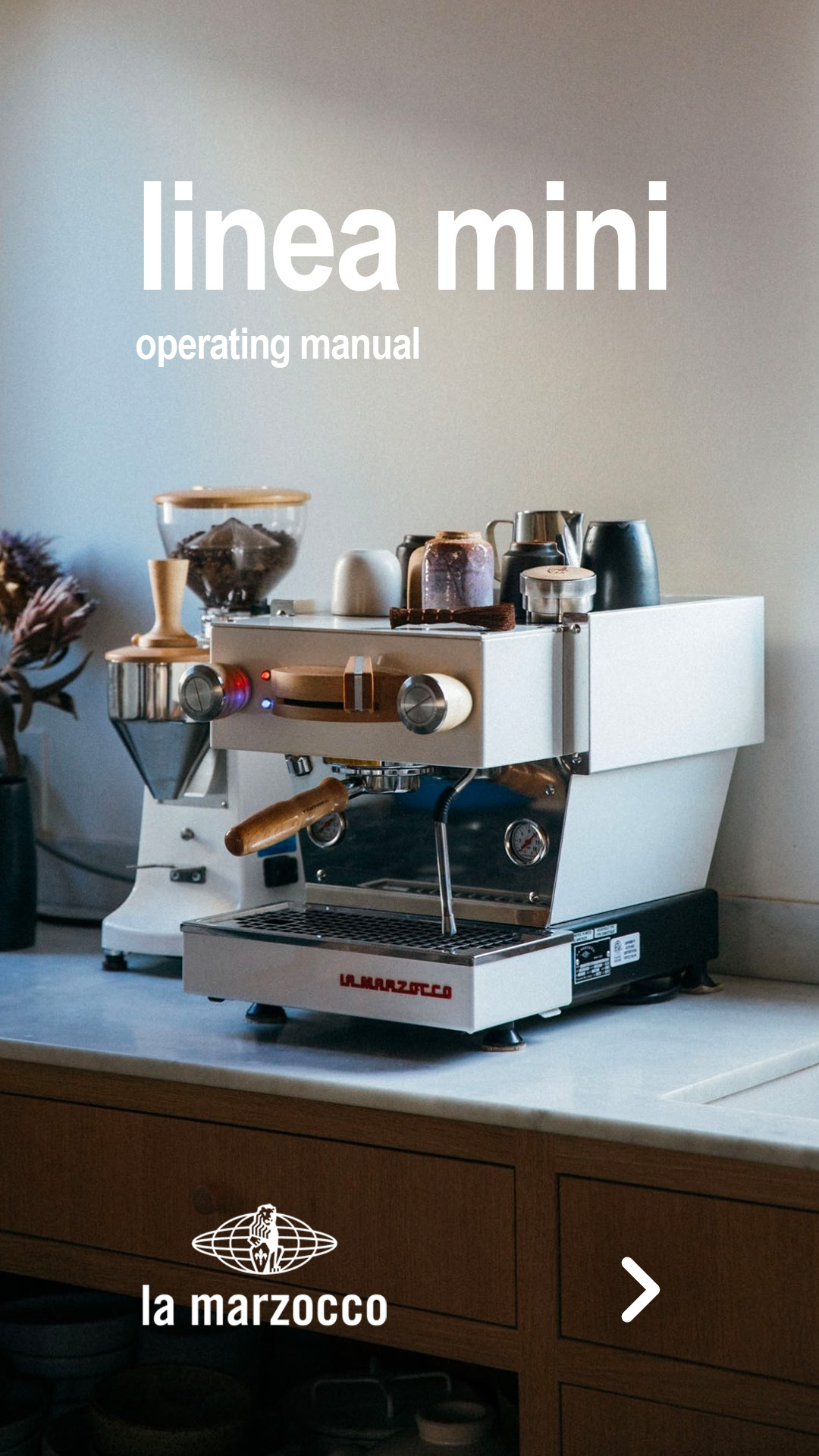
FMC:
the future of product & packaging communication
With a single tap, a Folio Mobile Chip delivers product and brand information straight to a customer's phone.
Businesses place FMCs (Folio Mobile Chips) on products, packaging, tags, labels, and signage, to make communication effortless, while streamlining supply chains and reducing print and labor costs.
A single tap gives customers instant access to manuals, warranties, assembly instructions, videos, brochures, menus, programs, and regulatory fine print.
FMCs set the highest standard for mobile graphic formatting, delivering digital content with seamless clarity.
Why Current Solutions Fail
Print is Problematic
- Expensive compared to digital.
- Environmentally unpopular.
- Impossible to update efficiently.
- Low engagement.
QRs are Problematic
- Physically awkward.
- Slow delivery of content.
- Linked to awkward mobile websites and PDFs.
- Low engagement.
Why FMC Matters
- Reduces your print and content creation cost.
- Shortens your communication production cycle.
- Takes advantage of the best Mobile UX.
- Radically improves your graphic design.
- Generates the highest engagement rates.
- Provides useful analytics.
FMCs deliver Folios made for the phone
❌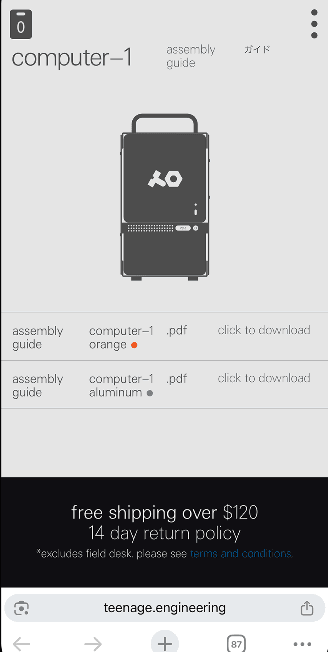
Better than websites
❌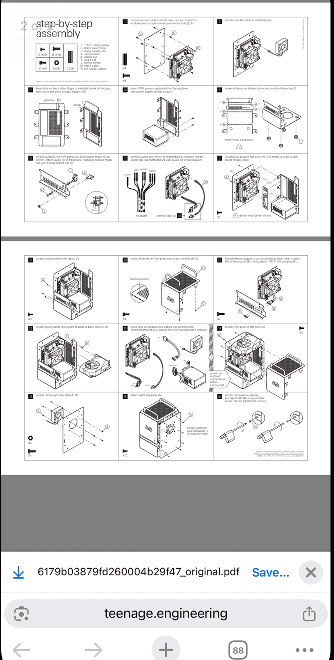
Better than PDFs
✅
FMC Folios
Unparalleled UX
- ✅ Instantaneous access to digital content.
- ✅ A full screen visual experience.
- ✅ A clutter free graphic format.
- ✅ Auto play video.
- ✅ Intuitive swipe orientated user navigation.
- ✅ Multi-lingual.
- ✅ Link-friendly.
Chip Durability
 100% secure, un-hackable
 Water Resistant
 Cold Resistant
 Heat Resistant
 Humidity Resistant
 Compatible with all surfaces (including metal)
FMC Services
FAQs
NFC stands for Near Field Communication. It is a short-range wireless connectivity technology that lets two devices exchange data when brought within a few centimeters of each other. An NFC "chip" is the integrated circuit (IC) that powers this communication.
It works through magnetic induction. When two NFC-enabled devices (like a phone and a payment terminal) come close, they create a magnetic field. There are 2 modes of NFC devices:
• Active – has its own power source and creates its own field, like a smartphone for payment.
• Passive – does not have a power source/battery, like a credit card, key fob, or tap sticker. These are powered by the field generated by an active device
• Active – has its own power source and creates its own field, like a smartphone for payment.
• Passive – does not have a power source/battery, like a credit card, key fob, or tap sticker. These are powered by the field generated by an active device
While they both use radio frequencies and the same methodologies, they are not the same. RFID (Radio Frequency Identification) is a term that covers a broad category, while NFC is a specialized set of RFID frequencies designed for security and short-range.
• RFID: Can work over long distances (meters) and is often one-way (tracking
inventory, automated cashier, clothing security tags).
• NFC: Limited to short distances (4cm or less) and supports two-way
communication (peer-to-peer).
• RFID: Can work over long distances (meters) and is often one-way (tracking
inventory, automated cashier, clothing security tags).
• NFC: Limited to short distances (4cm or less) and supports two-way
communication (peer-to-peer).
The most common uses for NFC can be found in any "Tap to X" actions such as:
• Contactless Payments: Apple Pay, Google Pay, and physical contactless cards.
• Access Control: Keycards for office buildings, hotel rooms, and increasingly, using your phone to unlock your car (Digital Key).
• Public Transport: Tapping your phone or card at transit turnstiles
• Pairing: Connecting Bluetooth headphones or Wi-Fi routers by tapping them
against your phone.
• Contactless Payments: Apple Pay, Google Pay, and physical contactless cards.
• Access Control: Keycards for office buildings, hotel rooms, and increasingly, using your phone to unlock your car (Digital Key).
• Public Transport: Tapping your phone or card at transit turnstiles
• Pairing: Connecting Bluetooth headphones or Wi-Fi routers by tapping them
against your phone.
It is extremely short, typically 4 centimeters (about 1.5 inches) or less. This is actually a security feature, as it requires deliberate intent to initiate a connection.
The NFC chip with sticker can be made to be water resistant and can withstand
standard wear and tear but cannot be creased.
standard wear and tear but cannot be creased.
For standard chips that we use, it’s -20 to 70 Celsius and humidity is the same as general electronics, 20-80% RH. If there are situations that fall outside of these situations, there are different NFC chips available to handle different scenarios (extreme temperatures, underwater, metal surfaces, and laundry).
Generally, yes. Because the range is so short, a hacker would need to be physically standing right next to you to intercept the NFC data.
Yes. FMC only stores the link/URL to your Folio on the NFC chip and no other
information. The Folio itself is hosted separately and cannot be changed outside of the Folio environment.
information. The Folio itself is hosted separately and cannot be changed outside of the Folio environment.
Standard NRC chips won’t work on metal as it blocks the magnetic field required for NFC to work. This is why smartphones with metal backs usually have a small plastic window or antenna lines, or why you can't scan a tag if it's stuck directly onto a metal surface. There are specialized NFC tags that do work on metal. If these types of chips are required for your Folio implementation, we’ll be happy to discuss options.
NFC chips generally have a life span of around 10 years or 10,000 scans in normal use. Strong magnets, extreme temperatures, extreme humidity, and high exposure to UV will lower the lifespan of the chip. If chip usage is expected in any kind of extreme environment, specialized NFC chips can be used.
Most Apple and Android phones are NFC capable. If the smartphone is capable of Apple Pay and Google Wallet, then NFC is available for the device. Some Android devices may require some extra steps:
• NFC needs be turned on, some default it to off
• Phone must be unlocked to use NFC
• Antenna placement can vary per device and reading is done in center or top of the back of the phone
• Bulky and metallic cases can also cause interference.
As a backup option, QR Codes can be made available as stickers/cards for scanning
• NFC needs be turned on, some default it to off
• Phone must be unlocked to use NFC
• Antenna placement can vary per device and reading is done in center or top of the back of the phone
• Bulky and metallic cases can also cause interference.
As a backup option, QR Codes can be made available as stickers/cards for scanning
The industry is moving toward "multi-purpose" transactions. Instead of tapping once for loyalty points and again to pay, a future state involves a single tap that:
1. Verifies your ID/Age (if buying restricted items).
2. Applies your loyalty card.
3. Processes the payment.
4. Sends a digital receipt.
1. Verifies your ID/Age (if buying restricted items).
2. Applies your loyalty card.
3. Processes the payment.
4. Sends a digital receipt.
The EU and other regions are pushing for DPPs to aid sustainability. Luxury bags,
clothing, or batteries will have embedded NFC chips. Tapping the product will reveal its entire supply chain journey, authenticity proof, and recycling instructions.
clothing, or batteries will have embedded NFC chips. Tapping the product will reveal its entire supply chain journey, authenticity proof, and recycling instructions.
FMC stands for Folio Mobile Chip. We are a full package service that provides NFC Chips with links to a Folio on them where customers can tap the chip and a Folio shows on their smartphone showing full page content to user manuals, product guides, branding, warranties, and much more. We provide the chips, the platform for Folio creation, and analytics – we can even create a custom Folio for you as well.
No, our service is intended to be used with Folio only. In the future when “Multi-Purpose Tap” is adopted, then other actions can be introduced, but the opening of a Folio will still be the primary action.
No, an app is not required. While the Folio app does provide the optimal viewing experience, it is not a requirement and will open in a standard web browser.
No, the FMC chips are write-protected, and once the Folio URL is written, cannot be changed or overwritten
The URL on the FMC chip is a hosted URL that acts as a redirect to the Folio. In the event the Folio isn’t ready yet, we will provide the chips first and associate the Folio with the URL redirect once ready.
FMC provides the following metrics:
• Open/Tap counts
• Open/Tap geography
• Channels
• Time spent
• Date range selection (up to 90 days)
• CTA link clicks in the Folio
• Page level views and time spent
• Open/Tap counts
• Open/Tap geography
• Channels
• Time spent
• Date range selection (up to 90 days)
• CTA link clicks in the Folio
• Page level views and time spent
Not currently, but will be provided in the future
No, and never will. FMC collects usage data on the Folio and taps, but never data on the user, and certainly not any PII (Personal Identifiable Information) data.
No, and never will. FMC collects usage data on the Folio and taps, but never data on the user, and certainly not any PII (Personal Identifiable Information) data.
No, the URL on the FMC chips does not change at all. Content updates to the Folio are made and hosted independently.
The URL on the FMC chips acts as a redirect service and not to the Folio directly. A different Folio can be associated with the URL without changing the URL itself on the FMC chips.
The FMC Chip can only go to one URL only, but a Folio can be created as a landing page Folio with links to other Folios or websites. Some common examples include:
• Multiple languages
• Different product manuals
• Multiple languages
• Different product manuals
Any number of chips can be ordered; it is entirely dependent on your situation. You might only need a few for a sample run, or you might need hundreds of thousands for a full product run. Whatever the situation, we can accommodate and work with your supply chain.
The FMC Chip can be made as stand-alone stickers or combined with other formats. These mediums can be customized graphically to match any brand and marketing guidelines.
FMC can provide a fully customized solution package and provide the FMC Chips, build the Folio, and provide an analytics dashboard. If your company would like to design and build the Folios and FMC Chip designs, we can also accommodate this as well.
Our team of professional designers can create a Folio for you based on your branding and digital assets for a service fee. If your company would prefer to create a Folio, a portal is provided to upload images and videos to build your own Folio – we can help guide you here as well.
Folios and all related images and videos are cloud hosted. The FMC Chip tap will take the user to the Folio website URL to then view the Folio.
Folios are extremely versatile, but some common use cases are:
• Digital Manuals
• Videos and Tutorials
• Links to Warranty Activation
• Links to Product Registration
• Instructions
• Recipes
• Catalogs
• Digital Manuals
• Videos and Tutorials
• Links to Warranty Activation
• Links to Product Registration
• Instructions
• Recipes
• Catalogs
FMC does not provide a fully customized Folio URL, but a custom subdomain can be purchased so that your company branding can be used in the subdomain portion of the Folio URL such as: https://brand.pub.foliomobile.com.
The cost will vary depending on some factors:
• Folio needs to be designed from FMC designers
• Quantity of chips
• Sticker/chip type (Special chips are needed for placement on metal or in harsh environments)
• Folio needs to be designed from FMC designers
• Quantity of chips
• Sticker/chip type (Special chips are needed for placement on metal or in harsh environments)
If further information is required, or there’s a specific solution required, please feel free to contact our customer service team at info@foliochip.com
The FMC Chips usually come in a sticker format and can be applied to the packaging or product. If another format is required, we can accommodate that as well.
FMC and our chip suppliers make every effort to ensure quality, but in the case where there are chip defects that meet the defect rate limit, replacements will be provided.
FMC complies with the following requirements:
• International packaging and safety standards
• GDPR (no personal information taken from phone users)
If any printed materials are required by law to be provided, FMC can be used in addition to the printed material but cannot replace them fully.
• International packaging and safety standards
• GDPR (no personal information taken from phone users)
If any printed materials are required by law to be provided, FMC can be used in addition to the printed material but cannot replace them fully.
FMC can scale and provide as few or as many chips as needed, and can apply to multiple product/SKUs